Breakfast
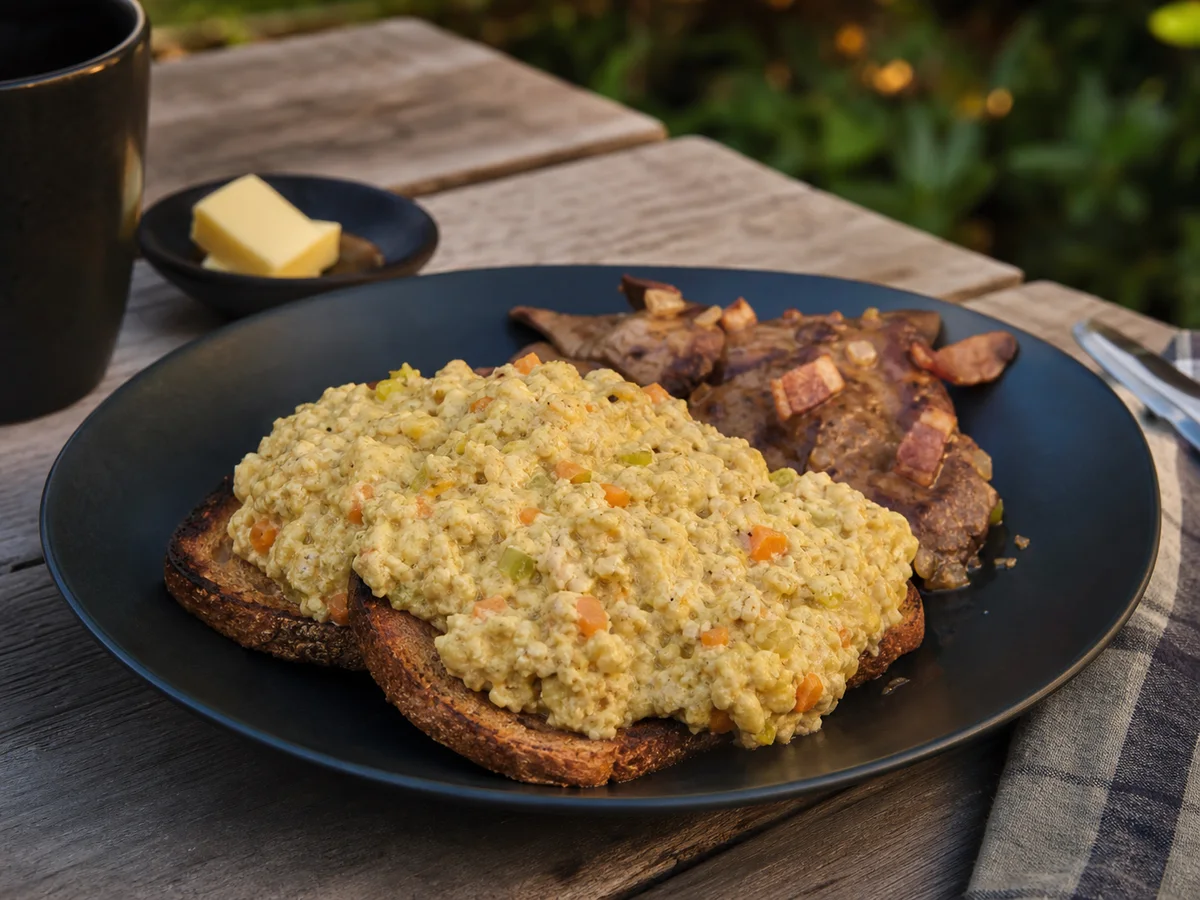
Brains on toast
Marion Harland’s original method for Brains on toast, retained as a source transcription for modern discovery.
Prep, cook, and serving values are clearly labeled editorial estimates. This transcription still needs a verified yield and modern kitchen adaptation before WorkLife will allow it to create a shopping cart.
From the cited source
Source ingredient cues
These cues were extracted from the historical method for discovery. Use the complete source method and citation alongside them.
- Scald and blanch the brains, beat smooth, add three eggs and beat hard.
- Have ready a tablespoonful of butter in a frying-pan hissing hot;
- turn in the mixture and stir steadily for three minutes.
- Baked calf’s liver (larded) Lard with strips of fat salt pork, inserted perpendicularly.
- add a carrot, two small onions, a half-dozen stalks of celery, all chopped fine;
- the juice of a lemon and a quart of strong stock;
- cover the saucepan and bake slowly for two hours and a half, basting often with the liquor in the pan.
Historical transcription
Source method
- 1
Scald and blanch the brains, beat smooth, add three eggs and beat hard. Have ready a tablespoonful of butter in a frying-pan hissing hot; turn in the mixture and stir steadily for three minutes. Serve upon rounds of toast.
- 2
Baked calf’s liver (larded)
- 3
Lard with strips of fat salt pork, inserted perpendicularly. The lardoons should project on both sides. Cover the bottom of a saucepan with minced pork, place the liver on it; add a carrot, two small onions, a half-dozen stalks of celery, all chopped fine; the juice of a lemon and a quart of strong stock; cover the saucepan and bake slowly for two hours and a half, basting often with the liquor in the pan. When done remove the liver, and put into the oven for a few minutes to brown; make a rich gravy of the remainder of the gravy in the pan; put the liver in the center of the dish, strain the sauce and pour over it.
Nutrition pending
No invented nutrition numbers.
WorkLife will publish nutrition and scalable serving quantities only after this historical transcription receives a measured modern adaptation.